Blog
Same as it Ever Was: The Luxury of Ignorance
By Jay
Series: Leadership
Tags: leadership, organizational-behavior, systems-thinking, privilege, accountability
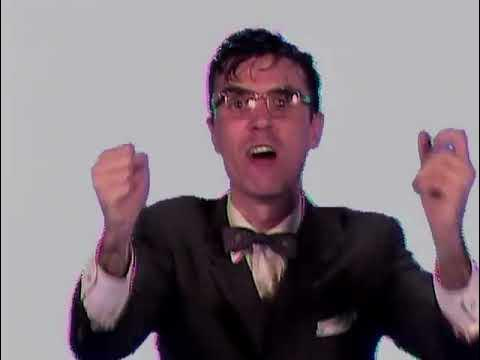
The Luxury of Ignorance: When We Choose Not to Know
It’s late Friday afternoon and as I am finishing up for the day, a customer email comes in with some new information on a low priority bug we’ve been working on. I thank the customer, and then while the thought is still in my head I write up a quick note in slack asking a colleague to help validate my new understanding of the bug.
I click send and then I move on to the weekend.
I found out on Monday that they’d spent two hours that Friday evening investigating what I’d asked about, worried it might be blocking the customer. It wasn’t blocking the customer. It wasn’t even urgent. I’d just fired off the question when it occurred to me, enjoying the luxury of not thinking about the blast radius of that simple message.
It was such a small thing; type out a quick message and send it. But that’s how most of our choices work: effortless for us, consequential for someone else. We drift through our days making decisions that feel weightless, never feeling the gravity they create elsewhere.
David Byrne calls this luxury of ignorance the “same as it ever was.” In the song “Once in a Lifetime,” he speaks to a life lived on autopilot. We “let the days go by”, and we’re not aware that the water is holding us down. We’re not aware that the current is pulling us away.
That Friday I was letting the water hold me down. I was drifting in the current of a system designed to be effortless for me, oblivious to the fact that the current was carrying someone else away. These aren’t separate phenomena. They’re the same luxury, the same insulation, the same choice not to see the weight of our decisions.
The good news is that once you start to see this, you realize it’s everywhere. “Same as it ever was.”
The Invisible Hands
A founder I worked for had a habit of making “small” suggestions in project reviews. They were always framed as optional, just ideas to consider. But he was the founder, and everyone knew his “suggestions” weren’t really optional. What he experienced as intellectual curiosity the rest of the team experienced as task to complete.
He did the same thing at home. Makes “suggestions” to his partner about how the kitchen should be organized, how the kids’ schedule should be structured, what to do with the laundry, what to do with the dishes. He experienced these as collaborative discussions. His partner experienced them as edicts that come with an implied “you’ll handle the details, right?”
In both contexts, he was insulated from the downstream effects by his position. He was able to enjoy the creative thinking without feeling the weight of the logistics or the stress of the execution. That was his luxury of ignorance.
He was letting the days go by in his own company, his own marriage, in his own home, operating on autopilot in a way that made him a stranger to the labor that sustained his life. The water held him comfortably while someone else does the swimming.
The Questions We Don’t Ask
When I merged that “quick fix” into production at 4:30 PM, I knew in some abstract way that someone would need to deal with any fallout. But I didn’t really think about the on-call engineer’s experience. I didn’t think about the page in the middle of the night, and the stress of debugging something they’d never seen before.
When I told my wife “sure, let’s have a party,” I said yes to the pleasant part of having a party, without thinking about the stress of planning it. I didn’t think about the time spent cleaning, the time spent managing the kids while we got ready. You know, all the work that makes that pleasant part possible.
This is how you wake up one day and ask yourself: “This is not my beautiful house. This is not my beautiful wife.” When you use your privilege to say “yes” to the result while ignoring the execution, you become a guest in your own life. You are enjoying a “beautiful house” that you didn’t actually build, because you weren’t there for the mental and physical labor that makes it stand. The luxury of ignorance doesn’t just hurt the person doing the work; it alienates you from the reality of your own existence.
The Architecture of Not Knowing
We build social, technical, and economic systems that help maintain this ignorance. The abstraction layers aren’t just in our code; they’re in how we move through the world.
When you order something online, you don’t see the warehouse worker racing against a timer. When you schedule a meeting, calendar software most likely doesn’t show you the focused work time it’s displacing. These abstractions are features, not bugs. They are the “water flowing underground”; the invisible, powerful systems that carry our comforts along while remaining safely out of sight.
But there is a second, quieter cost to this luxury. When we choose the path of least resistance, we often support entities that are not great for us or the world we actually want to live in.
We make trades. We trade our time for a service that’s not as good as we’d like because it’s cheaper. We trade our data for a smoother interface. We trade the health of our local communities for 10-minute delivery. We trade our own attention for an algorithm that knows exactly how to keep us scrolling.
Back to David Byrne; this is what he means by “into the blue again after the money’s gone”. The “money” isn’t just currency; it’s our agency, our autonomy, our ability to make conscious choices. When the transaction is too easy, when the friction has been engineered away, we stop being the customer and start becoming the fuel for the machine. The system runs on our unconsciousness. We find ourselves in a “beautiful house” owned by a corporation that doesn’t share our values, wondering how we signed the lease, wondering how we got here. “My god what have I done?”
The Privilege of Distance
The more insulated you are, the more you can afford not to know. This luxury of ignorance is itself a form of privilege. It’s available in proportion to your distance from consequences.
Let’s look at some examples of what this means in practice.
- If you’re wealthy enough, you order and it appears.
- If you’re powerful enough, you set direction without feeling the friction.
- If you’re senior enough, your preferences become defaults.
The more insulated you are, the easier it is to make choices that impact the world around you in ways that you wouldn’t have thought possible.
The Uncomfortable Exercise
So here’s the uncomfortable exercise I’m trying to practice: Before I do something, I try and visualize the consequences. This can be as simple as “What if I don’t do this?” or as complex as “What if I don’t do this, and then I don’t do that?”
Most of the world is designed as a black box. We are taught to be “users” who press buttons, not “operators” who understand mechanics. The systems want us to not look, to not ask, to just let the water hold us down. By trying to visualize the humans at the other end of the transaction, I am trying to figure out how to “work” the machinery of my own life—to understand what’s actually happening when I press the button.
Before I send that late evening message, I try to picture the person receiving it. What will they stop doing to address my question? Maybe I should explicitly ask them to not worry about it until the next morning, or maybe I should not send it until the next morning.
Before I order from Amazon, I try to ask if this is something I really need within the next two days. Is this something I can buy locally? Is this something that I really need?
Before I made decisions that impact my family I try and picture what that means for my wife and my kids. What is the mental load I am agreeing to on their behalf? Do I have a plan to help with that?
This isn’t about never sending messages or buying things. It’s an attempt to stop being carried by the “water flowing underground” and start taking responsibility for where the current actually goes, for who it carries away.
Living in the Discomfort
The goal isn’t to become paralyzed by the weight of every decision. It’s to attempt to give up the luxury of not knowing. To try to make our choices with eyes open.
You won’t succeed at this. I’m certainly not succeeding at it. But the alternative is the “same as it ever was”. A comfortable, insulated drift toward a blast radius we refuse to claim.
This is not about virtue signalling or performative awareness. It’s not about making decisions that make you feel better. It’s not about making decisions that make you feel better about yourself. If you find yourself talking more about your awareness than acting on it, you’re doing it wrong. If the primary benefit is that you get to think of yourself as someone who cares, you’re doing it wrong. If you humble brag about your accomplishments, you’re doing it wrong.
So what is the point? The point is the actual outcome for the actual person, not your self-image. The point is to reduce harm, not to perform concern about harm.
The trying matters because it’s the only path toward becoming slightly less unconscious about our lives. It’s the only way to ensure that when we eventually look around and ask, “Well, how did I get here?”, we actually have an answer we can live with.
Because the water will keep flowing. The current will keep pulling. The systems are designed to make unconsciousness comfortable. The question is whether you’re willing to swim against it. Not perfectly, not always successfully, but intentionally. Whether you’re willing to give up the luxury of letting the water hold you down and start choosing, with eyes open, where you actually want to go.
Related Reading
- Next in Series: Designed Ignorance - When not knowing is actually the system working as designed
- Communication: Breaking Down Silos - How power dynamics and hierarchy affect what we choose to see
- Systems Failures: The Quiet Collapse of Standards - How comfortable ignorance becomes normalized over time